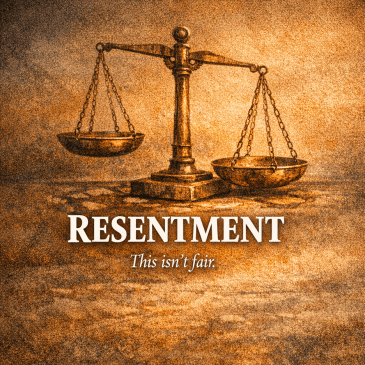
What You Carry Keeps Replaying Quietly
You tell yourself it’s fine.
That it doesn’t matter.
But the thought returns—quietly persistent.
What you gave.
What you absorbed.
What you didn’t receive back.
You don’t feel angry exactly.
You feel weighted.
Something feels off‑balance.
And you can’t stop noticing it.
What Resentment Sounds Like
Resentment doesn’t yell.
It tallies.
It says:
“Why am I always the one?”
“They don’t see what this costs me.”
“This shouldn’t be mine to carry.”
Resentment feels justified because it often is.
Something has been unequal.
Its tell isn’t exaggeration.
It’s fixation.
What Resentment Is Trying to Do
Resentment is an attempt to preserve dignity.
It interprets imbalance as threat:
If this continues, I disappear.
Resentment holds memory where boundaries were unclear.
It keeps score when voice was absent.
Resentment doesn’t trust mutuality.
It trusts vigilance.
Resentment in the Inner Life
When resentment shapes the inner life, the past stays active.
Moments replay—not to heal, but to justify distance.
Energy drains slowly.
Joy feels muted.
Life doesn’t feel overwhelming.
It feels heavy.
Resentment in Relationships
In relationships, resentment creates quiet separation.
Care remains—but warmth thins.
Conversations stay polite.
Intimacy stalls.
Resentment rarely explodes.
It calcifies.
A Noticing Close
Resentment softens when its story is named—not acted out.
Noticing resentment creates a chance for truth:
about cost, about limits, about what was never said.
Interpretation gives way to clarity.
You May Notice Resentment Alongside…
- People Pleasing — when accommodation precedes imbalance
- Avoidance — when truth stays unspoken
- Truth — when cost is named clearly

